Insights
Weekly digest · Week of Aug 17, 2026

Ohio's campus is financed by its chip vendor

NVIDIA put up to $105 billion of credit behind an Ohio campus that starts delivering in 2028, and an AI loop lifted South African cell-site energy savings to 13.5%.

Economics
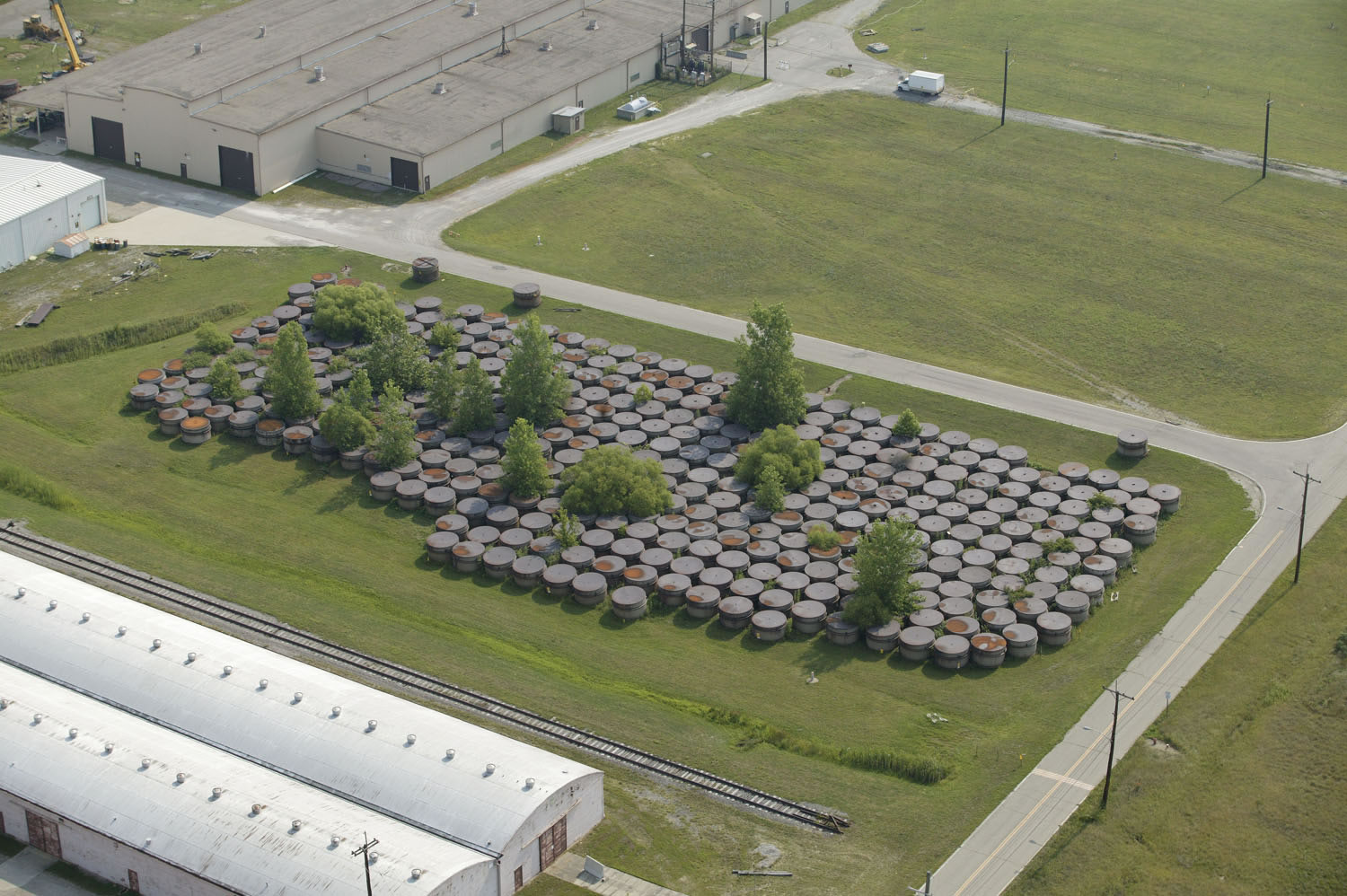
The decommissioned Portsmouth enrichment site from the air, the land, power and rail a campus gets built on.
ENERGY.GOV / Wikimedia Commons · Public domain

Land, power and shell

SB Energy will build, own and operate a data center at a decommissioned enrichment plant in Pike County, Ohio, under a twenty-year lease to OpenAI. NVIDIA is neither owner nor tenant. It is providing credit support on the land, power and shell to secure an initial 4.25 IT-GW and up to $105 billion in financing.

The constraint on this site was power, not chips. A developer can borrow against a twenty-year lease from a creditworthy tenant, not against a substation that does not exist. The vendor's credit is what turns a shuttered enrichment plant into a financeable asset, and the price of it is exclusivity: no other silicon goes in. SB Energy and SoftBank are building at least 10 gigawatts of new generation and $4.2 billion of regional grid infrastructure to get 8 IT-GW out of the site, and NVIDIA is investing $1.5 billion in SB Energy.

Nebius took the other route to the same money. It priced $5.0 billion of convertible notes, upsized from $4.5 billion, with $3.0 billion of it at a 0.50% coupon due 2030, earmarked for data centers and GPUs. The cash cost is half a point a year. The real cost is a 40% conversion premium and an accretion to 110% of the principal at maturity. The Ohio capacity arrives in phases beginning in 2028.

Metric move

The marketplace H200 low end went to $3.40 a GPU-hour from $2.87 and the B200 low end to $5.31 from $4.13, while all four neocloud list ranges held for a second week. Both low ends are tenth-percentile asks, across 45 and 19 offers this run.
Spotlight
A telecommunications mast against a sunset sky, the hours when traffic falls and the radios can idle.
W.carter / Wikimedia Commons · CC BY-SA 4.0

Powering down the towers on a forecast

Radio sites draw power around the clock, and fixed rule-based energy features leave most of the low-traffic hours untouched.

ZTE, Jul 28, 2026. A vendor-and-operator announcement of a commercial trial on a live network, reporting results against the rule-based baseline it replaced.

How it works

The system forecasts traffic per site, powers radio hardware down in a closed loop, and brings it back before demand returns.

The economics

Site energy savings reached 13.5% against 2.8% from the baseline features, an uplift of 10.7 percentage points across the trial sites.

Who it’s for

Network operations lead, Energy manager, CTO.

Transferable pattern

The measurement that matters is the gap to the existing rule, not to doing nothing. The same pattern fits cold storage, pumping stations and building HVAC.

Players to watch
NameWhat they doHQStagePosition
ZTEsupplied the AI energy loop in this deploymentShenzhen, ChinaListedIncumbent
MTN Groupthe operator that ran and then scaled the trialFairland, GautengListedAdopter
Ericssonsells the radio networks this software controlsStockholm, SwedenListedIncumbent
O-RAN Alliancewrites the open interfaces a controller plugs intoAlfter, GermanyInstitutionSpecialist
Signals

Our research reads the structure under an innovation market: the economics, the technology, the ecosystem that connects them. .

New research, by email

Insights